Gummy Bears
Bulk Gummy Bears for Wholesale & Custom Orders
Sweeto Sweets produces gummy bears for wholesale, bulk orders, and full custom projects. Pick from our ready-to-ship catalog, or build your own with custom shapes, formulas, and packaging. Fast sampling, factory direct supply.
- Factory Wholesale Pricing
- White Label
- Full OEM & Custom Support
- Global Fast Delivery
- Audit-Ready & Certified
- Brand-Ready Packaging
- Sugar-Free Options Available
- Low MOQ for Trial
- Fast Sampling
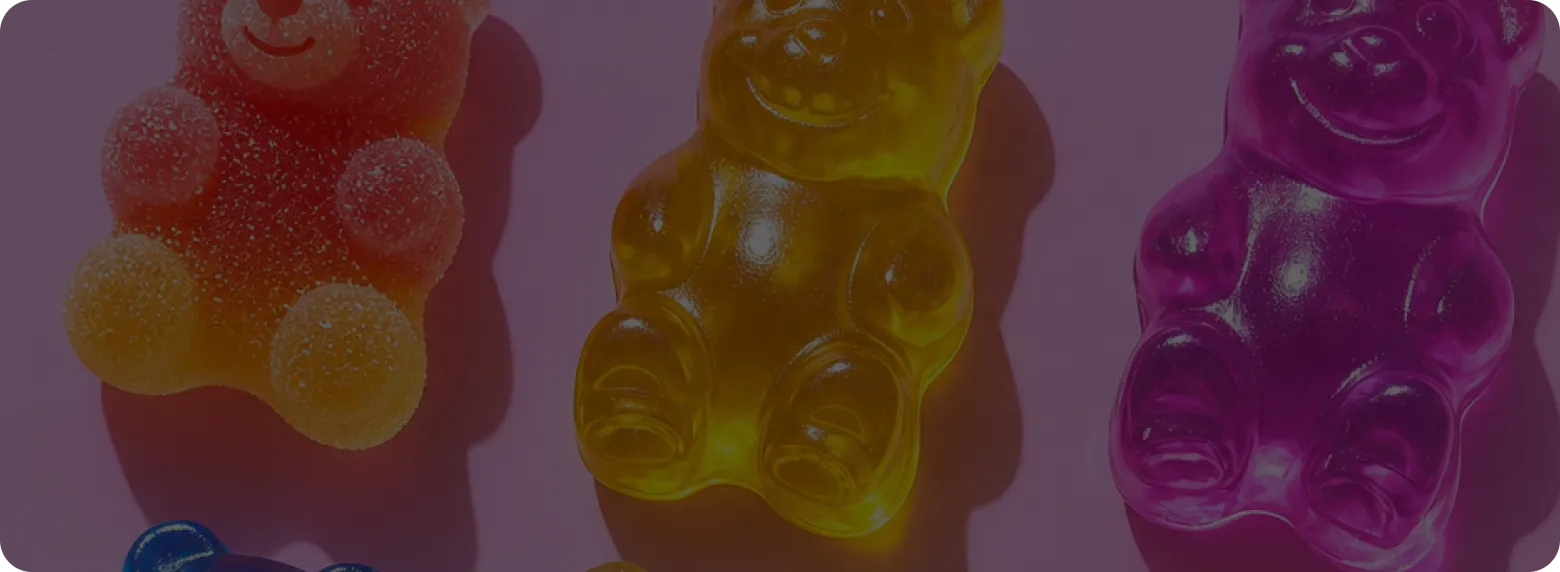
All the Bears You Need
Classic BearsMini BearsGiant Bears3D BearsMini BearsSour BearsFilled Bears
Key Specs & Capabilities
| Product Name | Gummy Bears |
| Available Types | Classic / Mini / Giant / 3D / Sour / Filled |
| Base Recipe | Gelatin-based or pectin-based |
| Flavor Options | Mixed fruit, single fruit, sour, custom blends |
| Dietary Options | Sugar-free, vegan, halal, kosher, gluten-free |
| Piece Weight | 2g – 8g (custom available) |
| Color Options | Single color, two-tone, multi-color |
| Surface Treatment | Oil polish, sugar coating, sour coating |
| Packaging | Bag, jar, pouch, display box, bulk carton |
| Private Label / OEM | Supported |
| MOQ | Stock from 500 cartons; OEM from 1,000 cartons per SKU |
| Lead Time | Stock: 15–25 days / OEM: 30–45 days |
| Sampling | 5–15 days (DHL / FedEx) |
| Shelf Life | 12–18 months |
| Certifications | HACCP, ISO 22000, BRC, Halal, Kosher (on request) |
| Export Markets | Europe, North America, Middle East, Asia |
| Shipping | FOB Xiamen, CIF, DDP available |
| Use Cases | Retail, promotional gifts, bulk repack, seasonal |
| Pack Size | Custom from 30g to 5kg |
| Custom Shape / Mold | Supported (4–6 weeks for new mold) |
How Sweeto Makes Better Gummies
Better gummies start with quality ingredients, the right process, and recipes that actually move with the market. Since 2010, we've been developing new gummy formulas year after year, adapting to what global buyers, retailers, and end consumers really want. Cleaner flavor. Consistent texture across millions of pieces. Color and shape that hold up on the shelf. This is what Sweeto Sweets stands for — and what every batch is built on.
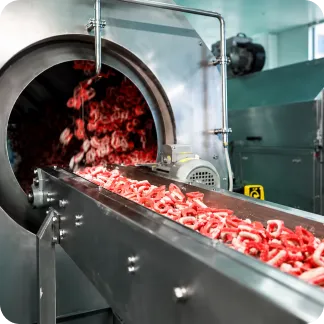
Vacuum Cooking
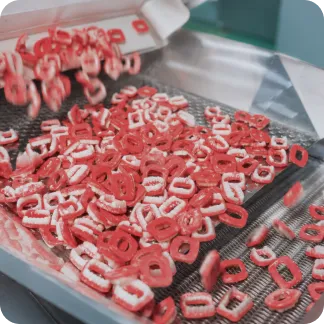
Precision Depositing System
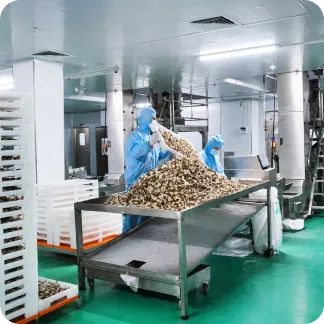
Constant Temperature Curing
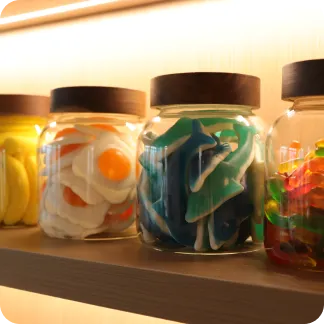
Vivid Color & Clean Surface
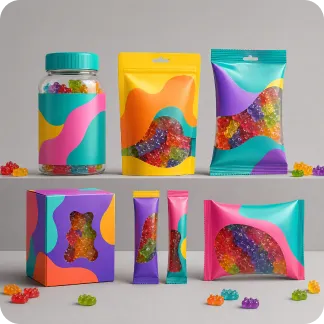
Retail-Ready Packaging Support
For ready-to-ship gummy bears, MOQ starts from 500 cartons or one mixed container. For OEM and private label projects, MOQ is typically 1,000 cartons per SKU. Trial orders and mixed-SKU containers are negotiable for new partners.
Everything to Know About Custom Gummy Bears for Wholesale & OEM Orders
Custom gummy bears sit at the intersection of a classic candy format and modern brand building. The bear shape has been a global bestseller for a century, which means shelf recognition is already built in — your job as a buyer is to differentiate through recipe, flavor, dietary positioning, and packaging. This guide covers what importers, wholesalers, and brand owners should evaluate before placing a custom or OEM order.
Gelatin vs. Pectin: Choosing the Right Base for Your Market
The gelling agent is the first and most consequential decision in any custom gummy bear project, because it determines texture, dietary claims, shelf stability, and which markets you can legally and culturally sell into.
| Factor | Gelatin-Based | Pectin-Based |
| Texture | Elastic, bouncy, classic chew | Firmer, cleaner bite, less sticky |
| Dietary claims | Standard; bovine gelatin can be Halal-certified | Vegan, vegetarian, Halal, Kosher friendly |
| Heat resistance | Softens in hot climates; cooler shipping preferred | Better stability in warm-climate markets like the Middle East |
| Cost | Lower raw material cost | Typically 10–20% higher unit cost |
| Best for | Mainstream retail, kids' segments, price-driven markets | Vegan lines, clean-label brands, Halal-first markets |
Many buyers now run both: a gelatin line for mainstream volume and a pectin line for premium or plant-based positioning. A manufacturer that produces both bases in-house lets you consolidate sourcing under one supplier and one quality system.
The Full Customization Spectrum: What Can Actually Be Changed
"Custom gummy bears" covers far more than printing your logo on a bag. In practice, customization happens across six dimensions, and understanding them helps you write a precise RFQ:
- Shape and size: classic bears from 2g to giant formats of 8g and above, plus fully custom molds shaped like your mascot or logo.
- Flavor: single-fruit, mixed-fruit, sour, regional profiles (mango and pomegranate perform well in Middle Eastern markets; berry blends lead in Europe and North America), or a flavor matched to a benchmark sample you provide.
- Color: single color, two-tone, or multi-color assortments, with natural colorants (fruit and vegetable concentrates) increasingly requested for clean-label ranges.
- Surface treatment: oil polish for a glossy classic look, sugar sanding, or sour coating — each changes both appearance and eating experience.
- Dietary formulation: sugar-free, reduced-sugar, vegan, Halal, Kosher, gluten-free, or vitamin-fortified recipes.
- Filling and structure: center-filled bears, layered textures, and 3D or 4D formats that command premium retail pricing.
How the Custom Mold Process Works
A proprietary shape is one of the strongest brand assets in confectionery — consumers recognize the silhouette before they read the label. The typical development path with an OEM factory looks like this:
- Design brief: you supply a logo, character, or reference image with target piece weight.
- 3D rendering: the factory returns a digital model with technical drawings for approval, so you can verify proportions before any tooling cost is committed.
- Sample mold and trial run: a small-cavity test mold validates how the design demolds and how details hold at your chosen recipe. Fine engraving that looks sharp on screen can blur in a soft gelatin gel, so this stage matters.
- Master mold production: once approved, full production tooling is machined — usually 4–6 weeks for a new mold.
Buyers who only need bag-level branding can skip tooling entirely and use existing bear molds with private label packaging, which shortens the timeline to a standard sampling cycle of one to two weeks.
Market Trends Shaping Custom Gummy Bear Demand
Three shifts are worth building into your product plan rather than reacting to later. First, plant-based reformulation has moved from niche to strategic: major global brands have launched pectin-based vegan bear lines, and the plant-based segment is consistently forecast to grow faster than the category average. Second, sugar reduction is being pushed by both consumers and regulation — sugar-free and reduced-sugar bears using polyols or stevia now anchor entire retail sub-categories, especially in the UK, EU, and health-focused e-commerce. Third, clean-label expectations mean named fruit extracts and natural colors increasingly replace generic artificial listings on packaging in Western markets. For buyers serving the Middle East, Halal certification has moved from a differentiator to a baseline requirement, and heat-stable pectin formulations reduce melt risk in transit and on shelf.
Cost Structure and MOQ: What Drives Your Unit Price
Custom gummy bear pricing is built from a handful of levers, and knowing them helps you negotiate intelligently:
- Base recipe: pectin, sugar-free, and fortified formulas carry higher ingredient costs than standard gelatin recipes.
- Order volume: factory-direct pricing improves sharply at full-container quantities; stock designs typically start at lower MOQs than fully custom SKUs because changeover and cleaning time is amortized across the run.
- Tooling: a one-time mold fee applies only to custom shapes and is spread across all future reorders.
- Packaging format: bulk cartons are cheapest per kilo; retail-ready pouches, jars, and display boxes add material and labor but arrive shelf-ready.
- Logistics: FOB terms give you freight control, while CIF or DDP simplifies landed-cost planning; for hot-season shipments to warm regions, factor in temperature-controlled containers.
A practical approach for first orders: start with a trial quantity on a stock or lightly customized recipe, validate sell-through, then commit tooling and larger volumes to the winning SKU.
How to Vet a Custom Gummy Bear Manufacturer
Because gummies are an ingestible product crossing borders, supplier verification is not optional. Experienced buyers check five things before signing: valid international food safety certifications (HACCP, ISO 22000, BRC) with certificate numbers you can verify; willingness to support factory audits or third-party inspection; a real sampling program — a serious factory ships lab samples by courier within days, not weeks; documented traceability from raw materials to finished lot, which protects you during customs clearance and any recall scenario; and export experience in your specific market, since labeling rules, sugar declarations, and additive approvals differ between the EU, GCC, and North America. A supplier who asks detailed questions about your destination market's compliance requirements is usually a safer partner than one who simply quotes the lowest price.
Packaging Solutions for Wholesale and Private Label Programs
Packaging determines both your margin structure and your channel fit. Bulk cartons (typically 5–10kg inner bags) suit repackers, candy stores, and pick-and-mix programs. Retail pouches from 30g to 500g with custom printing are the standard for supermarket and e-commerce brands — factories generally require higher print-run minimums for custom film, so confirm packaging MOQ separately from product MOQ. Jars and display boxes fit impulse and counter placement, while single-serve sachets are growing in promotional and travel channels. Note that from August 2026, EU packaging regulations require recyclable formats with minimum recycled content, so buyers targeting Europe should specify compliant film structures now rather than reprinting later. Shelf life for properly packed gummy bears runs 12–18 months; nitrogen flushing and quality barrier film protect texture across long ocean transits.